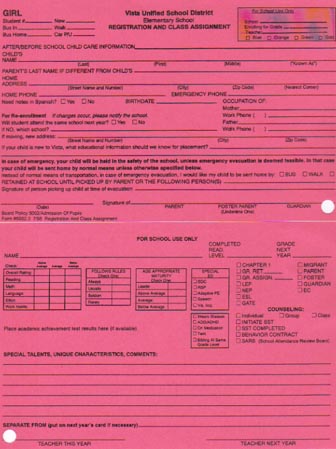
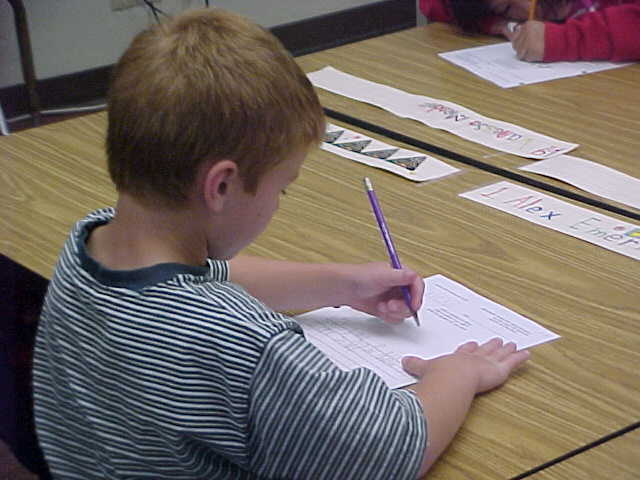
Learning about a student’s particular skills, interests, aspirations, natural aptitudes, and academic abilities is of great importance for all teachers. This entails not only learning about how that student performs at each subject, but also his or her cognitive development, language abilities, natural skills, interests, and family background. While in the classroom, I have taken on this daunting task in numerous ways that have helped me better understand my students, and ultimately provide better instruction for their academic success. When I entered the classroom for my beginning student teaching, the class had already been together for the first half of the year, so the initial parent questionnaires had already been turned in months previously. So, to learn about my new students, I reviewed their portfolios and read through their Registration and Class Assignment Cards. The cards provided me with information about the child’s family, address and phone number, basic academic achievements the previous year, and any medical concerns. After reading the cards, I had a clearer understanding about each student, and was able to provide more focused instruction since I knew the ups and downs of the students.
To help a teacher better assess a student’s academic abilities, a portfolio is a necessity within the classroom. The portfolio holds numerous examples of student work in all subject areas. The examples are taken throughout the year, which helps track student progress. At the end of the school year, this portfolio is passed on to the next teacher who will use it to learn about a student’s academic abilities across the curriculum. Other items that an instructor may use to better understand her students is a parent questionnaire, various standard and modified assessments performed throughout the school year, one-on-one meetings with the parents, classroom observations, and case studies.