As an elementary school teacher, I am responsible for understanding and teaching numerous subjects across the curriculum. Through my education at California State University at San Marcos (CSUSM), I have learned many pedagogical skills, which have helped me in my student teaching, and will certainly aid my instruction when I become a full-time teacher in the future. To better understand my diverse skills across the curriculum, I have included many examples under each of the different curricula areas that I will be teaching. Although many examples are cited, these are just a few of the numerous pedagogical skills that I will be able to implement in the classroom.
Teaching Reading-Language Arts in a Multiple Subject Assignment
Reading, writing, and speaking are the most fundamental, and as such are the most important subject(s) are for students to learn while in school. Students who master the language arts tend to do better in other subject areas since language crosses over into all subjects, whether it be mathematics (word problems), science (writing experiments), and history (reading of past histories). Therefore, teaching Language Arts so that all students can and will learn is tremendously important. The teacher must include instruction in vocabulary development, writing fundamentals, reading comprehension, response and analysis, written and oral conventions, word analysis, fluency in writing and speaking, writing strategies, and listening and speaking strategies and applications.
While student teaching, I had many opportunities to teach the Language Arts in various different settings that allowed me to utilize skills that I had learned at the University. I taught basic reading, writing, listening, and speaking skills to a small group of third grade second-language learners whose first language is Spanish. The students responded eagerly to my instruction, and showed signs of improvement throughout the four weeks that I spent with them. Aside from the small group instruction, I also taught lesson to the whole class. One lesson in particular introduced the idea of biographies. The students were instructed to conduct an interview of an adult they knew (mother, father, aunt, uncle, grandparent, or guardian). After the interview, the students then compiled their questions and answers into a biography. The students had the opportunity to share their work with their classmates, and then we created a classroom biography book that contained all their biographies.
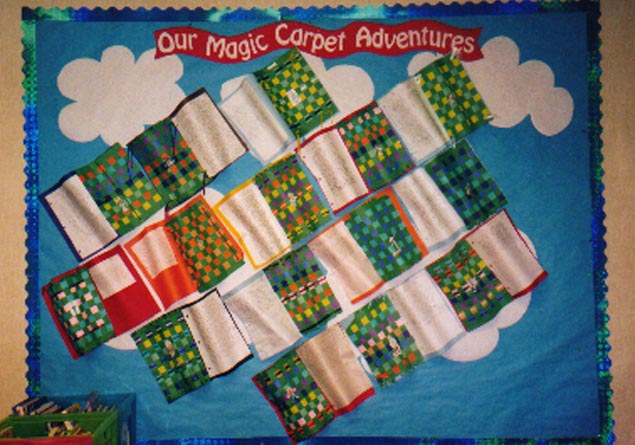
While teaching first grade students, I had the opportunity to teach a weeklong lesson that centered around the book The Wind. I taught students how to predict text through rhyming, and engaged their interests through choral reading and group activities. I helped the students discover the idea of action in verb by having the students create pinwheels with descriptions. The students thoroughly enjoyed the activity, and better understood the use of verbs in sentences. During the time of President’s Day, I created a lesson that enabled the students to better understand the life of George Washington. As a class, we read a book about the life of George Washington, and then the students were told to create a little book of his life. The books contained complete sentences and corresponding pictures about the beginning, middle, and end of his life. Following that assignment, the students learned about the similarities and differences of living during the time of George Washington. The cross-curricular lesson established the idea of Venn Diagrams to the students. The students then created complete sentences comparing and contrasting specific details of life then and now.
Teaching Mathematics in a Multiple Subject Assignment
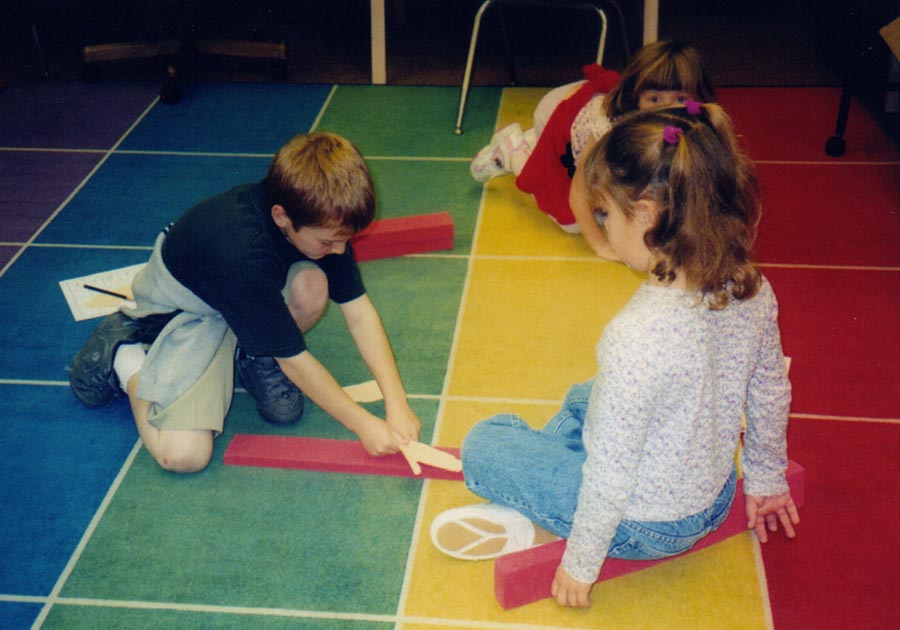
Mathematics is a subject I thoroughly enjoy, and thus I take great pleasure in sharing that enthusiasm with my students. Through my student teaching, I have had the opportunity to teach various levels of mathematics to students. When creating lessons, I begin by accessing the state academic content standards to help guide my instruction. I often use the school textbooks as reference for my lessons. However, I have found that often, students better respond to hands-on lessons that engage their interests through storytelling. One such lesson was on measurement. I began by acting out a story about a king who wanted a new bed, using students to help act out the play. Following the play, I had the students create their own measuring devices by tracing their hands, feet, and fingers, then cutting the objects out. The students were then instructed to measure various objects around the room using their newly made measuring devices. The students found the lesson to be very engaging and enjoyable. Following the lesson, we discussed the significance of using a standard measuring device, and all of the students understood the importance.
Teaching Science in a Multiple Subject Assignment
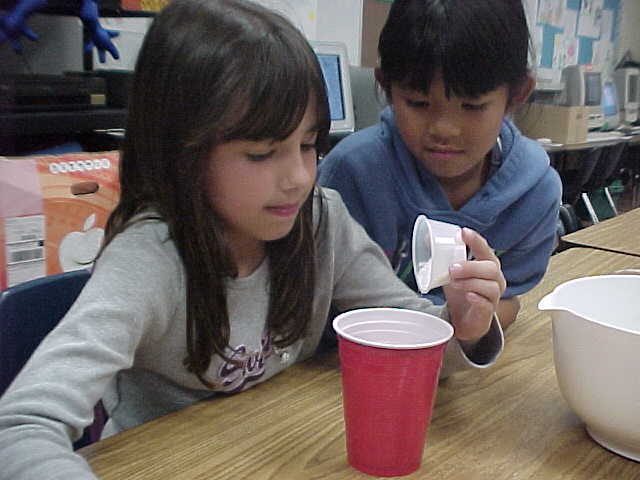
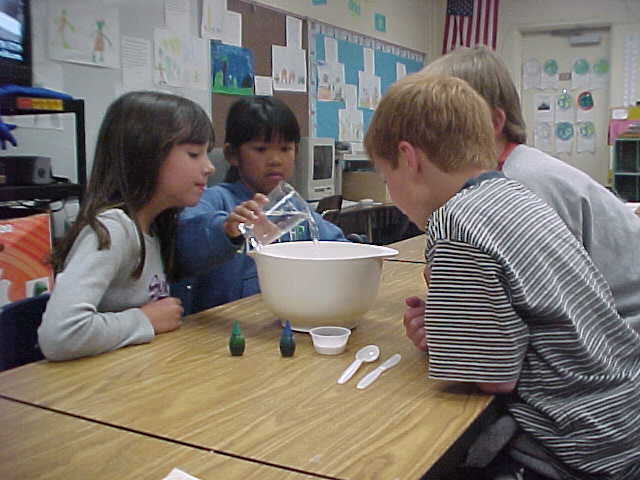
Through my own personal learning, I have found science to be a subject that is often taught through textbooks with long, often confusing descriptions that turn many students off, and cease to engage their interests. However, I also know that science can be very exciting and engaging for all students. When creating lessons, I mold interesting, thought-provoking, and engaging instruction around the state academic content standards. Two such lessons are on the water cycle, and matter. My lesson on puddles gave the students a weeklong look at evaporation through experimentation. The students evaluated their own group’s puddle on a daily basis. At the end of the experiment, they compared their results with other groups, and discussed the similarities, differences, and the outcomes.
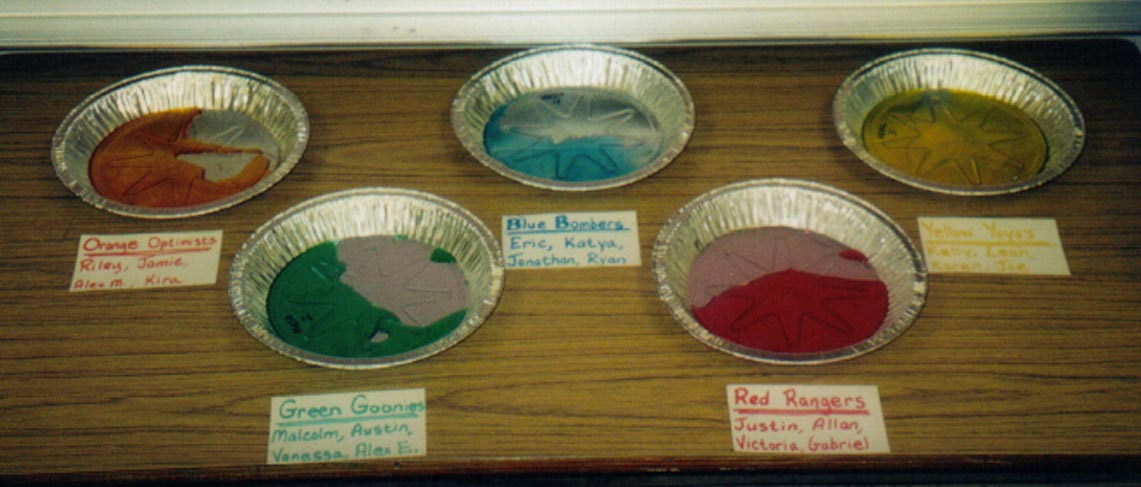
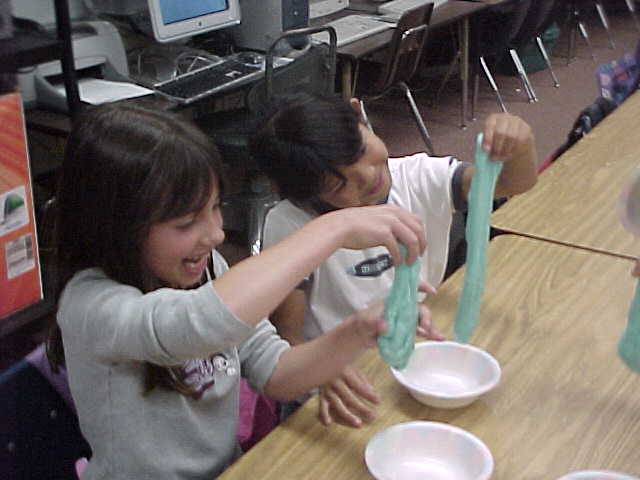
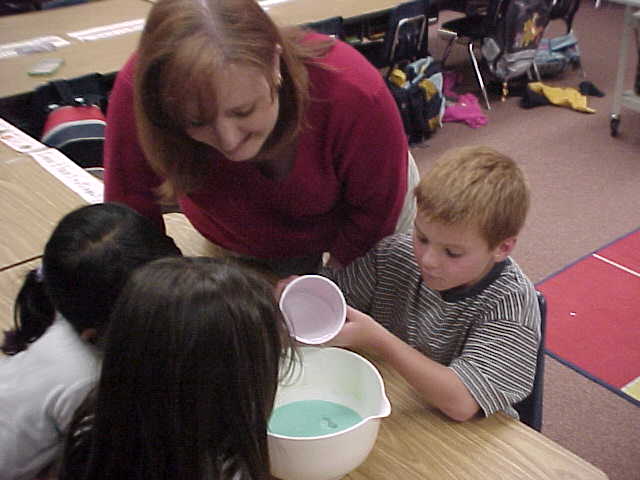
A lesson on matter called Gooey Gunk looked at the concept of properties of matter, and how matter can change properties when combined. The students combined some solid with two different types of liquids. When united, these substances changed properties, creating a colloid (a substance that has the properties of both a solid and a liquid). The students thoroughly enjoyed the hands-on lesson, and understood the concepts being taught because I provided them the opportunity to learn for themselves how matter can change. I honestly believe that had I not allowed the students to become engaged in the experimentation process, many would not have grasped the concept.
Teaching History-Social Scienece in a Multiple Subject Assignment
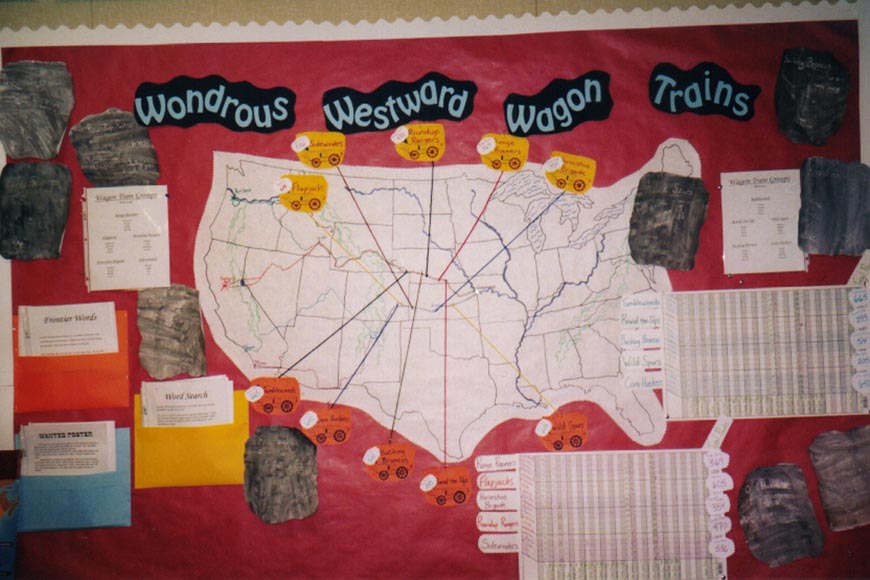
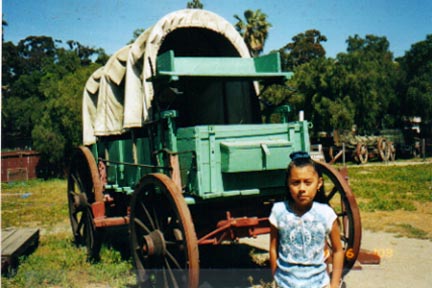
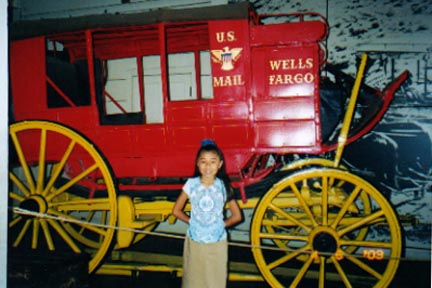
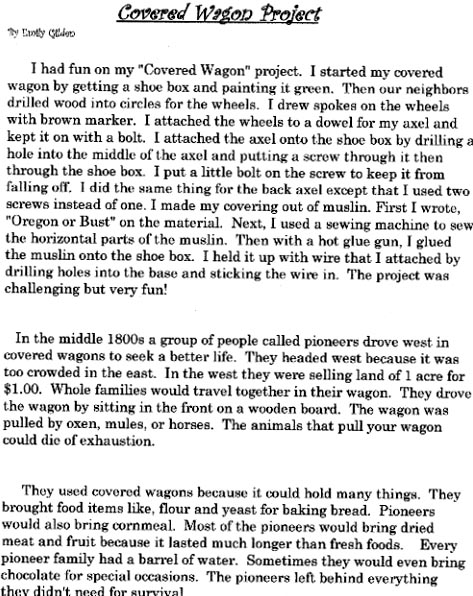
History and Social Studies are subjects that can become very dry and boring when taught directly from a textbook. As a teacher, I find it very important to mold the curriculum around active, engaging, hands-on lessons that include the state academic content standards. While teaching third grade, I had the opportunity to teach a five-week unit on the westward movement. Rather than directly following a textbook, I used the text as a guide to aid my instruction. I created a unit that simulated for the students the wagon train movement. Each group of four students became a wagon train. Each wagon train then encountered various hazards along their journey and had to make decisions as a group in order to continue. The unit also included many hands-on activities, music, art activities, readings, and research. As a final project, the students created their own covered wagon and wagon report. I found that by having the students become pioneers, they better understood the hardships and daily lives of the pioneers than had I taught directly from the textbook.